Tasmania may not be the first place that comes to mind when you think of Australia. But that’s exactly what makes the island so exciting. Located at the southernmost tip of the continent, it feels like its own little world: wilder, greener, more mysterious. Australia’s smallest state protects 42% of its land area in national parks and World Heritage Sites. For anyone who loves nature, wants to discover new things, and is looking for real adventure, “Tassie,” as the Australians say, is an absolute dream.
An island straight out of a fantasy film
Tasmania is renowned for its spectacular natural beauty: dense rainforests, crystal-clear lakes, steep cliffs, white beaches, and high mountains—often just a few kilometers apart. Many places seem as untouched as a national park that no one has ever visited. Tassie is considered one of the last true natural paradises.
Particularly well-known spots include Cradle Mountain with its impressive rock faces, Freycinet National Park with its turquoise bays such as the dreamlike Wineglass Bay, and the wild coasts of Tasman National Park.
Climate: Fresh and pleasant
Tasmania is cooler than mainland Australia—which many people find very pleasant. Temperatures are mild, and in summer it gets warm enough to swim without suffering from scorching heat. The air is extremely clean; it is said to be the cleanest air in the world. In any case, it’s perfect for outdoor adventures.
Vibe: Creative, open, and a little wild
The people of Tasmania are relaxed, close to nature, and proud of their island. The atmosphere is more laid-back than in big cities, and young people often meet in parks, on beaches, or at markets. Festivals such as Taste of Summer in Hobart or music events such as Party in the Paddock bring together everyone who enjoys good food, art, and music.
Highlights: Animals, beaches, and … devils
Tasmania is famous for its unique wildlife, especially the Tasmanian devil—a small but loud marsupial that you can see in special conservation parks. There are also wombats, wallabies, and penguins that live on many of the coastlines. The beaches are often almost deserted and feel like secret places that only you know about.
Sports & surfing: Waves with wow factor
Although Tasmania is better known as a hiking paradise, the island also has some great surfing spots—especially on the east and south coasts. Places like Bicheno, Eaglehawk Neck, and Bruny Island offer powerful waves that are ideal for surfing adventures. You’ll also find perfect conditions for hiking, mountain biking, kayaking, climbing, or simply exploring the unspoiled landscape.
Conclusion:
Tasmania is like a giant adventure playground for nature lovers and explorers. The combination of wild nature, exciting cities, cool culture, and sporting opportunities makes the island one of the most diverse places in Australia. Anyone who spends several months here will take home real experiences that will last a lifetime.
Hobart
Hobart, the historic capital of Tasmania, is located directly on the coast and combines nature, culture, and harbor atmosphere. The old sandstone warehouses from the 1830s, the waterways, and the lively Salamanca Market on the wide Derwent River give the city its very own character. Here you can breathe in the sea air, taste fresh fish, and discover one of the most beautiful natural harbors in the world.
The city is framed by the mighty Kunanyi / Mount Wellington and the wide Derwent River, so wilderness and adventure are just minutes away. The mountain itself is a huge outdoor playground: hiking trails, mountain bike tracks, and stunning panoramic views across southeastern Tasmania make it a must-see destination.
Hobart is also a creative city – with street art, small cafes, music festivals, and the famous MONA museum, known for its surprising, sometimes crazy art. Hobart offers the perfect mix of nature experiences, culture, and relaxed harbor vibes.
Launceston
Launceston – or “Launnie,” as the locals affectionately call it – was founded in 1806 at the mouth of the Tamar River and quickly developed into a trading center for wheat and wool farmers. The city’s early prosperity continues to shape it today: elegant historic streets, old parks, and lovingly restored buildings give Launceston its special charm.
With a population of around 68,000, Launceston is large enough to offer variety, but small enough to be explored comfortably on foot. The city lies at the confluence of the North Esk, South Esk, and Tamar Rivers and combines nature, history, and modern architecture in a unique way. The climate is also pleasantly mild – in January, the average maximum temperature is 23 °C, and in June, it is 11.5 °C.
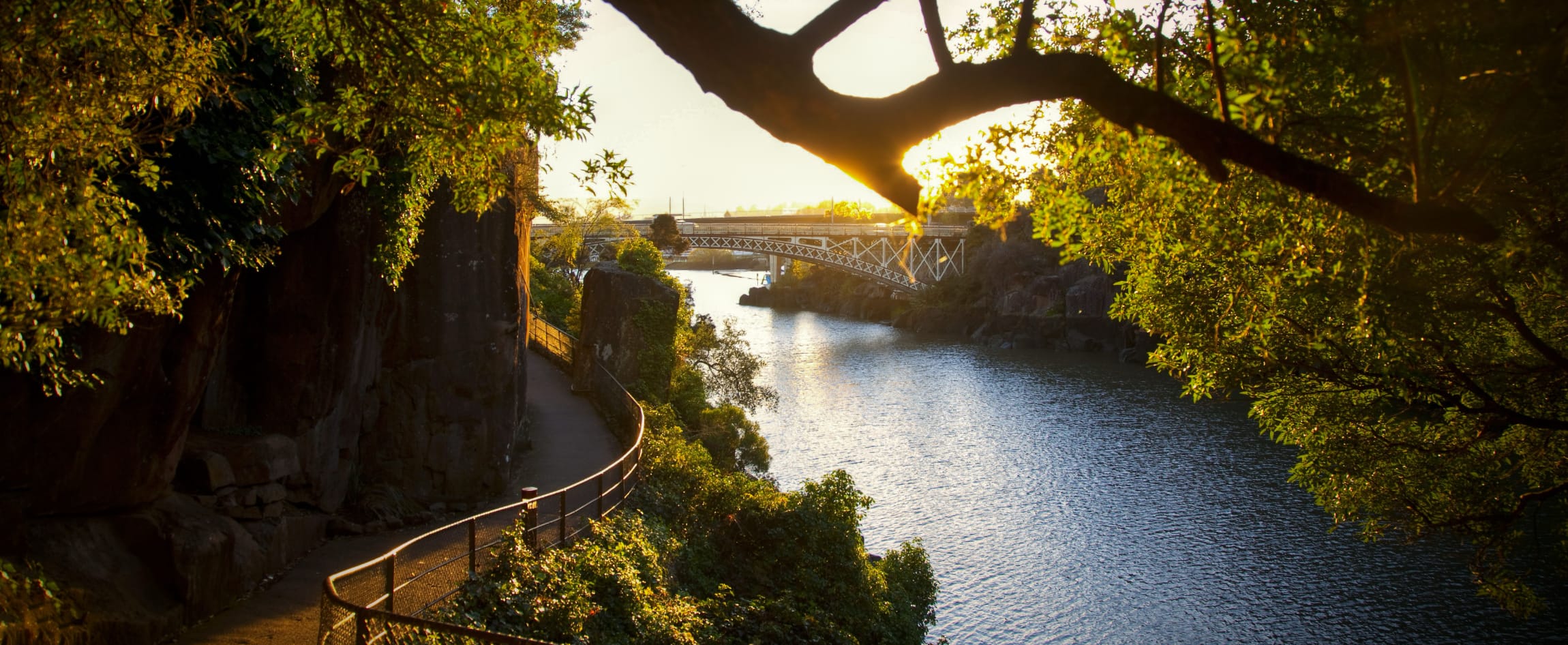
Launceston is an ideal starting point for tours of national parks and wine regions. The natural highlight of the region is Cataract Gorge, a spectacular canyon that has been a sacred site for the Tasmanian Aborigines for thousands of years.
Devonport
Devonport is located at the mouth of the Mersey River and, with around 22,000 inhabitants, is Tasmania’s third-largest city. It is best known for its harbor and the Spirit of Tasmania ferry, which regularly transports travelers from Melbourne to Tasmania. For many visitors, Devonport is their first impression of the island – a mixture of maritime history, colonial architecture, and relaxed coastal vibes.
The city is an excellent place to get to know Tasmania in a quiet, nature-oriented way. On the outskirts of the city lies the village of Don with the charming Don River Railway, where you can take a nostalgic train ride to Coles Beach. Along the coast, the Devonport Cycle and Walking Track leads to the Bass Strait Maritime Museum, which offers exciting insights into the region’s maritime history.
A special highlight is Lillico Beach, where little penguins waddle ashore at dusk. And if you’re lucky, you can even spot platypuses in the wild at Founders Lake.
Hobart
- Waterfront & Constitution Dock – Hang out at the harbor, eat fish & chips, watch boats
- Salamanca Market – Huge weekly market with food trucks, street music, art, and souvenirs
- MONA (Museum of Old and New Art) – Australia’s most colorful and quirky art museum
- Bonorong Wildlife Sanctuary – Wombats, wallabies, and koalas
- Mount Wellington / Kunanyi – Epic panoramic view over Hobart and the ocean
- Bruny Island (day trip) – Dolphins, sea lions, steep cliffs, and a beautiful surfing beach
- Maria Island – Car-free island for cycling, with wombats everywhere
- Huon Valley – Tahune Adventures – Suspension bridges over the rainforest, ziplining, and canopy walks
- Summer festival “Taste of Summer” – Music, food, young people, good vibes
- Richmond Village – Historic village straight out of a fantasy film
- Surf spot Clifton Beach – One of the most popular surfing beaches in the region
- Surf spot Eaglehawk Neck – Perfect for beginners – there’s also a surf school
- Port Arthur – UNESCO site, preserving the dramatic history of convicts in Tasmania.
Launceston
- Cataract Gorge Reserve – Swimming, hiking, wildlife viewing, cable car rides – right in the middle of the city
- Tamar Valley Wetlands – Perfect for photos, short walks, and birdwatching
- Queen Victoria Museum & Art Gallery – Cool, modern museum with natural history, history, and technology
- Penny Royal Adventures – Climbing walls, ziplining, abseiling, and boat tours
- Hollybank Treetops Adventure – Mega ziplines through the forest
- Festivale Festival – Music, street food, outdoor vibes, relaxed atmosphere
- Low Head – Watch penguins at dusk
- Mountain biking in Derby – One of the world’s best bike parks
Devonport
- Mersey Bluff Lighthouse & Coastline Walk – Lighthouse, blowholes, Aboriginal rock art, and perfect sunsets
- Surfing at Back Beach & Bluff Beach – Some of the best surf spots on the north coast – also good for beginners
- Devonport Surf Life Saving Club – Cool community, beach sports, and surf safety training
- Don River Railway – Historic steam locomotives to view or ride
- Spirit of Tasmania Terminal – Pier for the huge Bass Strait ships
- Lillico Beach – Little penguins come ashore at dusk
Nature and national parks in Tasmania
- Cradle Mountain – Dove Lake Circuit – Tasmania’s most famous hike. Not too difficult, but incredibly beautiful
- Freycinet National Park & Wineglass Bay Lookout – Turquoise water + white sand = Tasmania’s number one postcard motif
- Bay of Fires – White beaches, orange rocks, crystal-clear sea – one of the most beautiful coastlines in the world
- Tasman Peninsula & Cape Hauy / Cape Raoul – Spectacular cliffs and views directly above the roaring ocean
- Three Capes Track (short stage) – One of the most famous hiking trails in the world.
- Tasmanian Devil Unzoo – See Tasmanian devils up close
Red: State Schools; White: Private Schools; Green: Regional Schools (For details see The Australian Education System; Prices see under Prices and Services)
